Health & Safety Policy — Flat Clearance West Ham
 Purpose: This health and safety policy explains how our flat clearance and rubbish removal services operate to protect staff, clients and the public. It sets out responsibilities, safe working procedures and risk-control measures for any flat clearance service, waste removal job or rubbish collection assignment. The policy adopts a precautionary approach that emphasises training, assessment and continuous improvement rather than relying on assumptions about risk.
Scope: This policy covers all activities related to flat clearance, household rubbish clearance, bulky waste removal and related site work. It applies to employees, contractors and authorised visitors when engaged in clearance operations, loading, transport and disposal. The goal is to reduce incidents, control exposure to hazardous materials and ensure compliant, safe removal practices across every rubbish removal assignment.
 Responsibilities: Senior management has overall accountability for safety. Supervisors must implement procedures during each clearance, and all operatives are required to follow safe systems of work. Staff must report hazards promptly and participate in toolbox talks and site briefings. Personal responsibility is emphasised: every operative must wear the proper protective equipment and follow the rubbish clearance safe work instructions at all times.
 Risk assessment and planning: Before any removal job, a documented risk assessment will be conducted. Assessments include manual handling risks, hazardous waste identification, asbestos suspicion, rodent or pest contamination, unstable structures and access constraints. The planning phase defines task sequencing, control measures and necessary PPE so that each waste removal service proceeds without compromising safety.
Training and competence: Staff receive induction training, periodic refresher courses and specialised instruction for tasks such as moving heavy items, using lifting aids and working at height. Training records are maintained and competence verified before staff are assigned to complex clearances. Emphasis is placed on safe handling of sharp objects, electronics and potentially contaminated materials encountered in a typical flat clearance job.
Safe equipment use: Tools and vehicles are inspected and maintained to ensure serviceability. All operatives are trained in the safe use of trolleys, sack trucks, mattresses straps and mechanical aids. Electrical equipment checks and appropriate isolation procedures are applied to avoid accidental energisation. Where powered lifting or mechanical assistance is used, an authorised operator must supervise the operation.
Handling hazardous materials: If items potentially containing hazardous substances are discovered, such as certain paints, solvents, batteries, fluorescent tubes or suspected asbestos-containing materials, work will stop and a specialist removal or disposal route will be arranged. The policy prescribes conservative handling—when in doubt, classify as hazardous and follow containment and disposal controls consistent with local waste regulations.
Manual handling and ergonomics: Manual handling protocols are central to reducing injury. Operatives are instructed in lift planning, team lifts for heavy objects and the use of mechanical aids. Load weights are assessed before lifts and packaged waste is secured for transport. The company will rotate tasks to prevent repetitive strain and maintain safe rest intervals during extended jobs.
Emergency procedures
Emergency response arrangements are in place for incidents such as injury, fire or fuel spillage. First aid kits and trained first-aiders are available on-site during clearance operations. Incidents are recorded and investigated to identify root causes and prevent recurrence. A clear chain of communication ensures emergency services are contacted promptly when required.Controls and monitoring
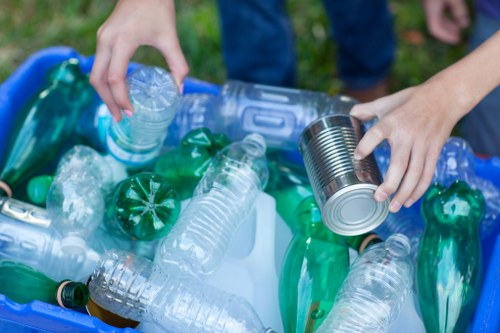
Routine inspections and audits ensure compliance with this policy. Key performance indicators include incident rates, near-miss reporting frequency and corrective action completion times. Weekly site checks, vehicle inspections and PPE audits form part of the monitoring process. Non-compliance prompts remedial action and, where necessary, temporary suspension of hazardous activities until controls are effective. Environmental and waste segregation: Waste is segregated on-site to maximise recycling and reduce landfill. Recyclables, electrical waste, inert materials and general rubbish are separated at source. Waste tracking documentation accompanies loads to authorised facilities. These measures protect operatives and the community while supporting a sustainable approach to clearance work.
 Review and continuous improvement: This policy is reviewed regularly, following any significant incident, regulatory change or operational update. Staff input is welcomed to refine procedures and strengthen controls. Through audits, training and practical safeguards, our goal is to deliver a safe, professional flat clearance and rubbish removal service that protects people and property while maintaining high standards of occupational health and environmental stewardship.
- Key commitments: risk assessment, training, PPE, safe equipment, hazardous materials management.
- Goals: zero preventable injuries, compliant waste disposal, continuous improvement of the removal company safety culture.
- Worker rights: to stop unsafe work and to raise concerns without reprisal.
Adherence to this policy supports a consistent, safe approach for flat clearance, rubbish removal and waste collection services. It sets expectations for staff conduct, operational controls and the company’s commitment to health, safety and environmental responsibility.